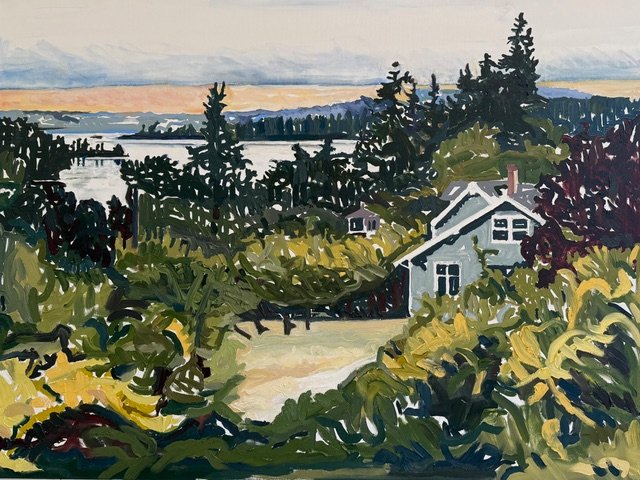
Gary Groves
Woodcut & Linocut · Bainbridge Island
Master printmaker carving finely detailed woodblocks on the island. Subject of a retrospective at the Bainbridge Island Museum of Art.

A contemporary fine art gallery whose front door is on every screen. Same exhibition, same selection, same opening hour, same standard — in Bainbridge, in Park City, or on the device you're holding. Step in slowly. Stay as long as the work asks you to.
Most galleries pick a side. Some serve a small circle of collectors at prices that exclude almost everyone. Others serve everyone, but selection becomes a database query and provenance becomes a checkbox. JG Art Gallery was built to refuse that trade-off.
Curation that earns the wall, transparency that earns the trust. Every work selected the way a gallery selects, every price shown the way a serious commerce platform shows. Worldwide shipping with documentation that reads like research, not a receipt. Payment plans for collectors who want to live with the work before they finish paying for it. A fourteen-day in-home trial because a piece either belongs in your space or it doesn't, and you should know which before the invoice closes.
Every exhibition opens online the moment it opens in person — in full, in resolution, for the duration of the show. The collector in Tokyo, London, New York, or São Paulo arrives on opening night with the same standing as the visitor walking in off the street.
The exhibition in full, on any device, in any city, for the duration of the show. Same selection as the physical galleries, same opening hour, same standard. Inquire about any piece directly. Available wherever you collect from.
Visit the gallery virtually →The Art Walk evening. Doors at five, exhibition opens at five-thirty, bar open until close. Artists in attendance for most openings.
The Bainbridge gallery →Gallery Stroll on Main Street. The same exhibition that opened on Bainbridge, now in mountain light.
The Park City gallery →Gary Groves · Pamela Wachtler · Kathe Fraga · Teresa Smith · Wendy Armstrong · Paula Griff · Erica Nordean · Brooke Borcherding
Woodcut & Linocut · Bainbridge Island
Master printmaker carving finely detailed woodblocks on the island. Subject of a retrospective at the Bainbridge Island Museum of Art.
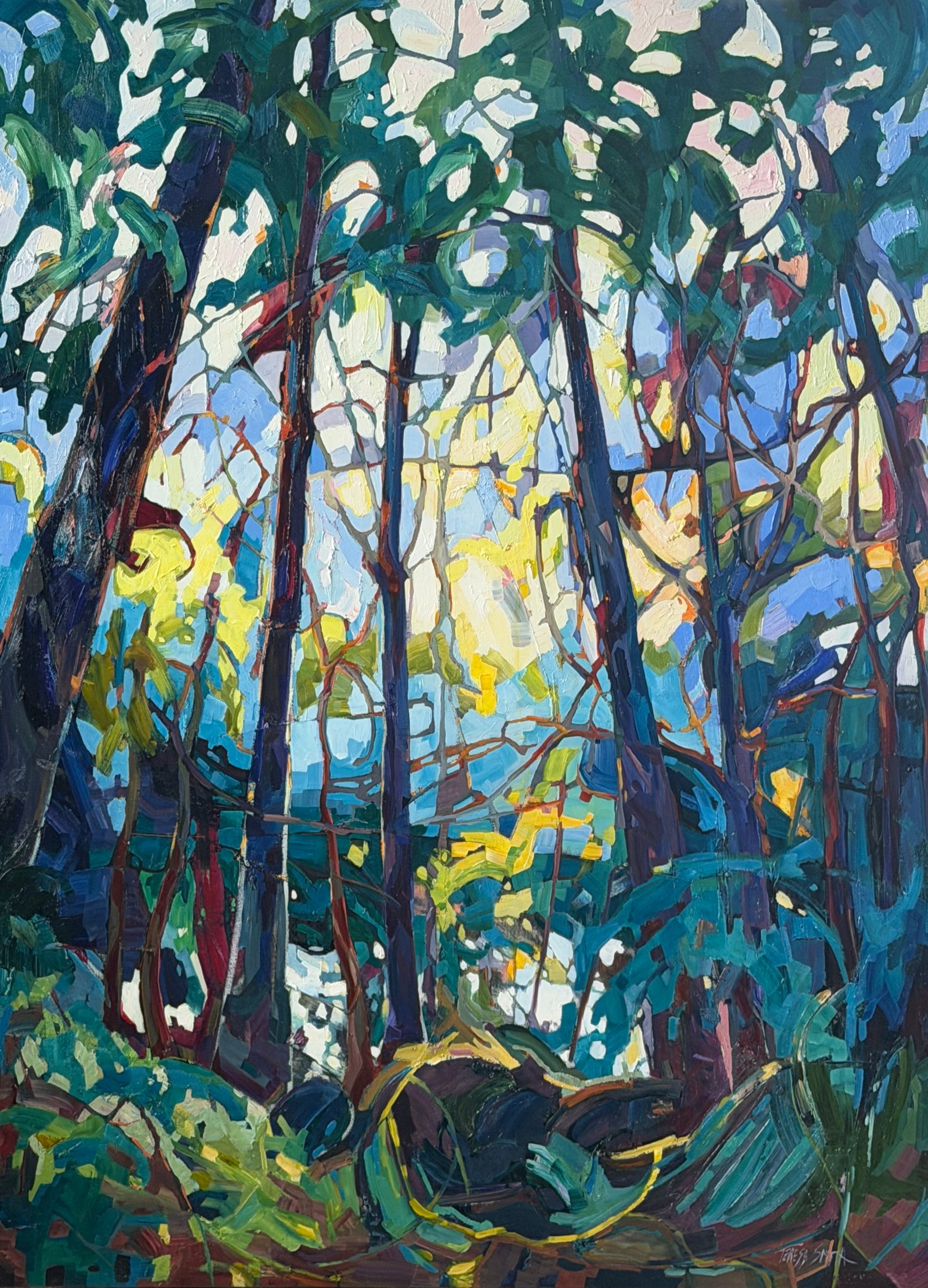
Oil on Canvas · Abstract Landscape
Paints the PNW forest as interior space. Grand Forest opens the show.

Oil on Canvas & Panel · Island Subjects
Five decades of making on Bainbridge Island. The show’s native voice.
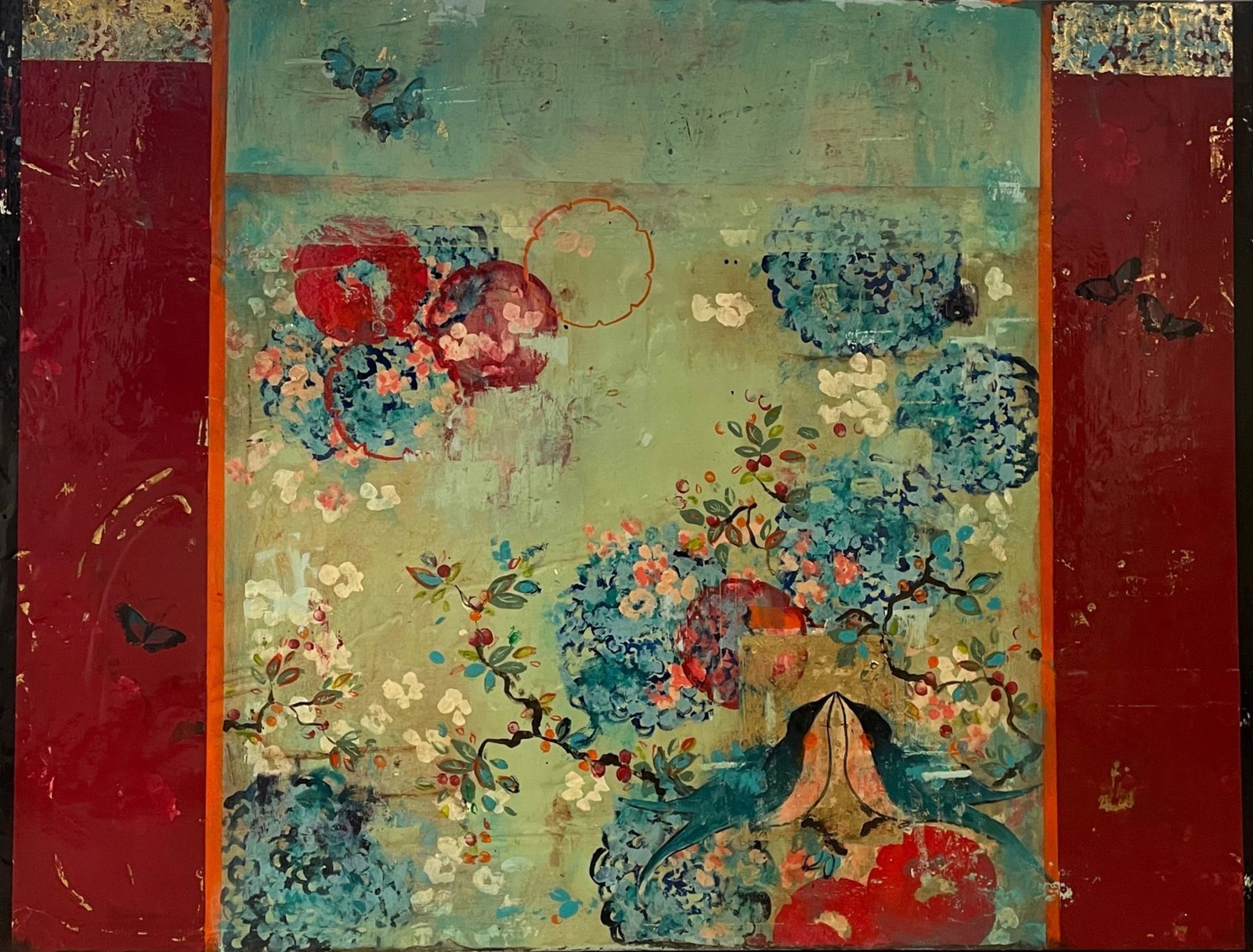
Mixed Media · Canvas & Panel
Antiqued fresco, gold leaf, Chinoiserie birds. Timeworn surface meets one bold modern stroke.
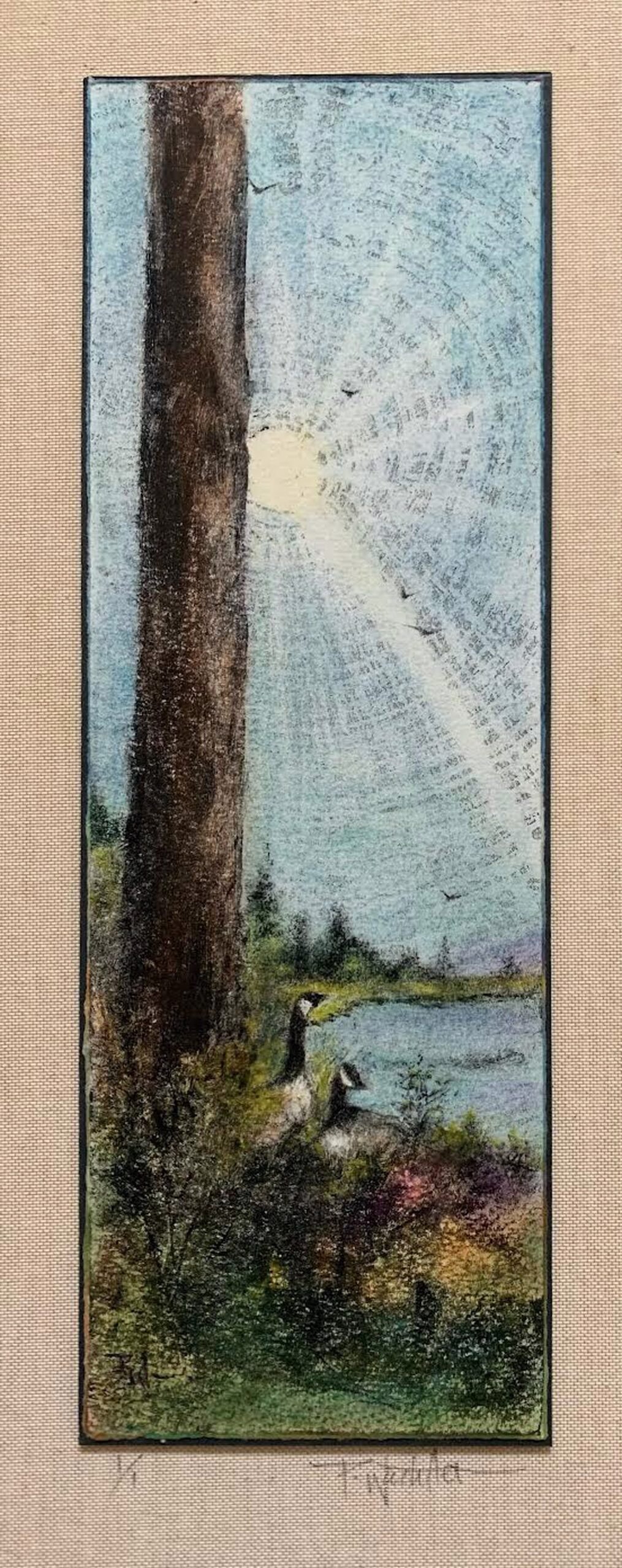
Oil on Canvas · Bainbridge Island Light
She paints the pause before the wash dries. Solo show at BIMA.
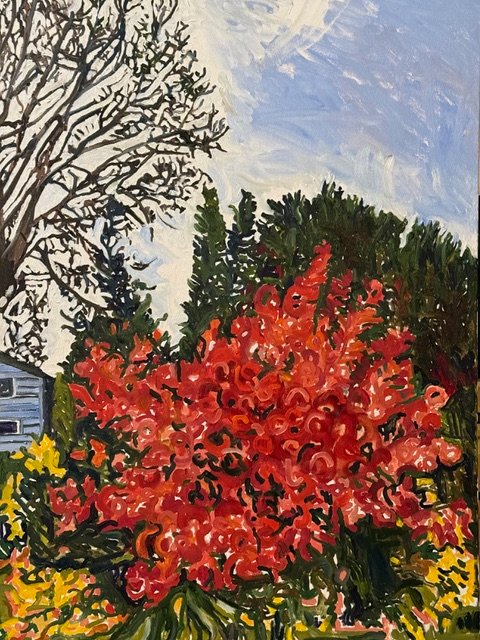
Oil & Graphite · Plein Air
Color bold, texture present, movement alive. Frank Benny Prize.
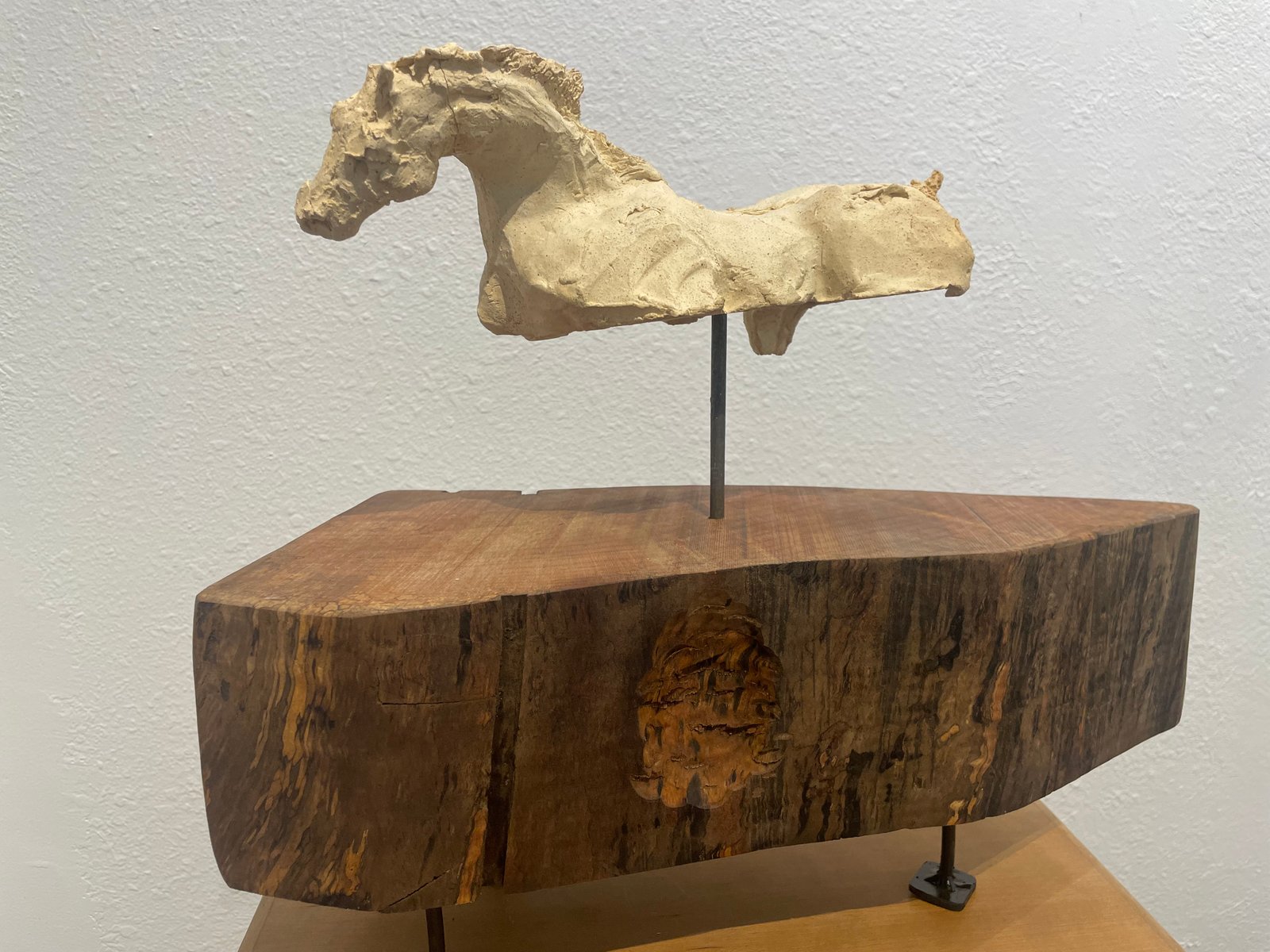
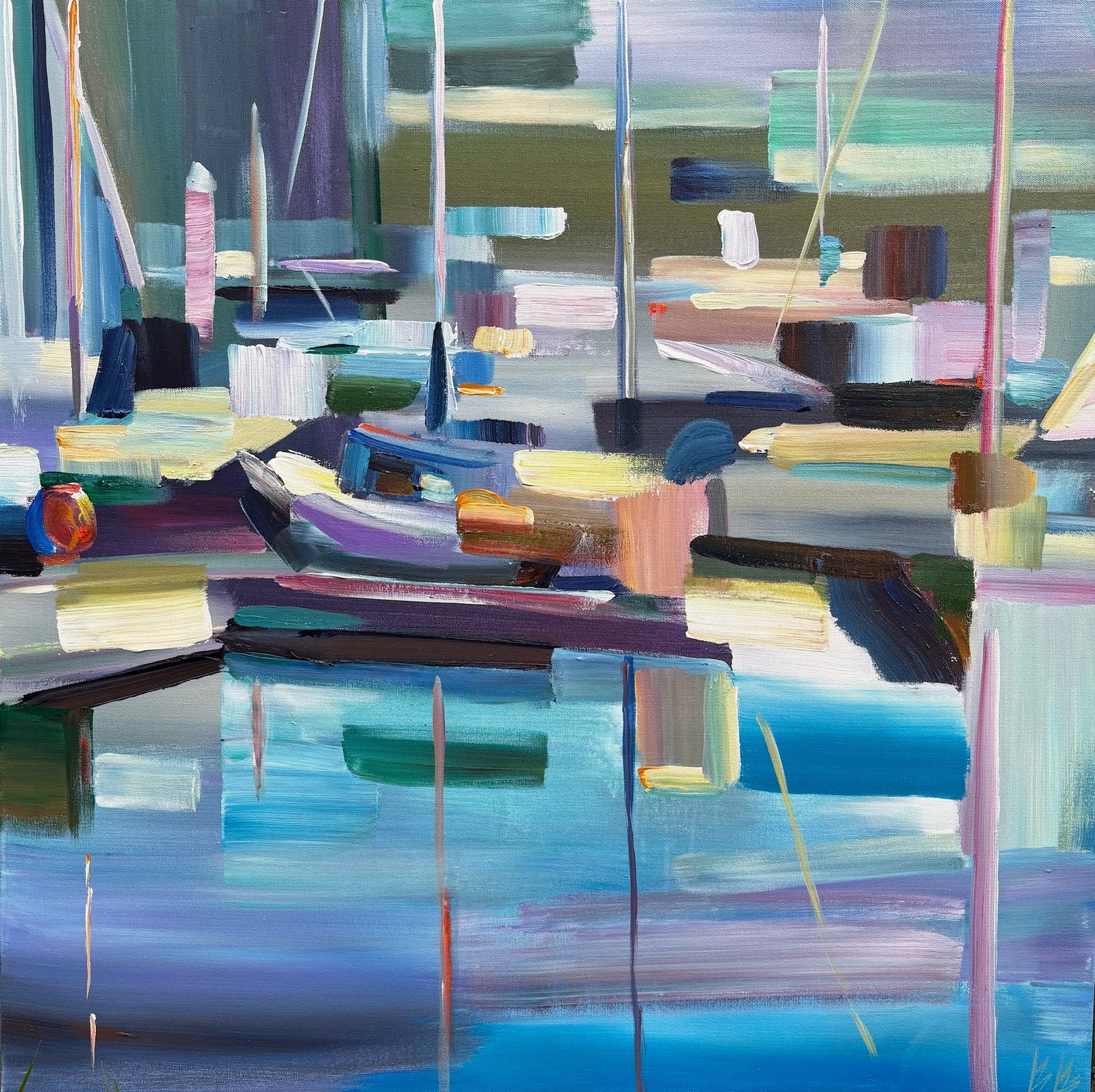
Oil on Canvas · Island Marina & Harbor
The island’s working waterfront held in bold, saturated color.
Each piece ships internationally with full provenance documentation, payment plans available, and a fourteen-day in-home trial.
Collecting was always supposed to feel like this. Plain English, plain price, plain path — first piece or hundredth.
Same exhibition, same selection, same standard — wherever you collect from.
A real human responds within one business day, from a named gallery contact, with the answer to your actual question.
Live with it, photograph it, hang it where you imagined. If it doesn't hold its room, send it back.
Or with Affirm, or with Klarna. Whichever fits the way you actually move money.
Insured, tracked, climate-handled, signed for.
Chain of custody, attribution opinion, indicated market range. The kind of paper you'd expect from research, not retail.
Painting that knows what it's doing. Sculpture that knows where it stands. Mixed media, photography, prints — all asked to do the same thing. Every artist represented by JG Art Gallery has been chosen against one question, and the answer doesn't change with medium, region, or career stage.
Find them on your own time. The program rewards patience.
A publication, not a blog. Longform writing on the artists, the work, and the questions a serious gallery program raises. First issue: Material Mediations · Spring 2026.
Read the first issue